What Grok actually is - and what it isn't
This explanation separates Grok’s technical reality from the claims surrounding it, clarifying how the system works, why it feels different, and where common misconceptions arise.
Recent discussion around Grok has blurred the line between what the system is designed to do and what some users believe it can already do. Claims range from Grok being a fundamentally different kind of AI model to suggestions that it operates with fewer constraints or deeper “truth-seeking” capabilities than other large language models.
This explanation clarifies what Grok actually is, how it fits into the current AI landscape, and where common misconceptions arise.
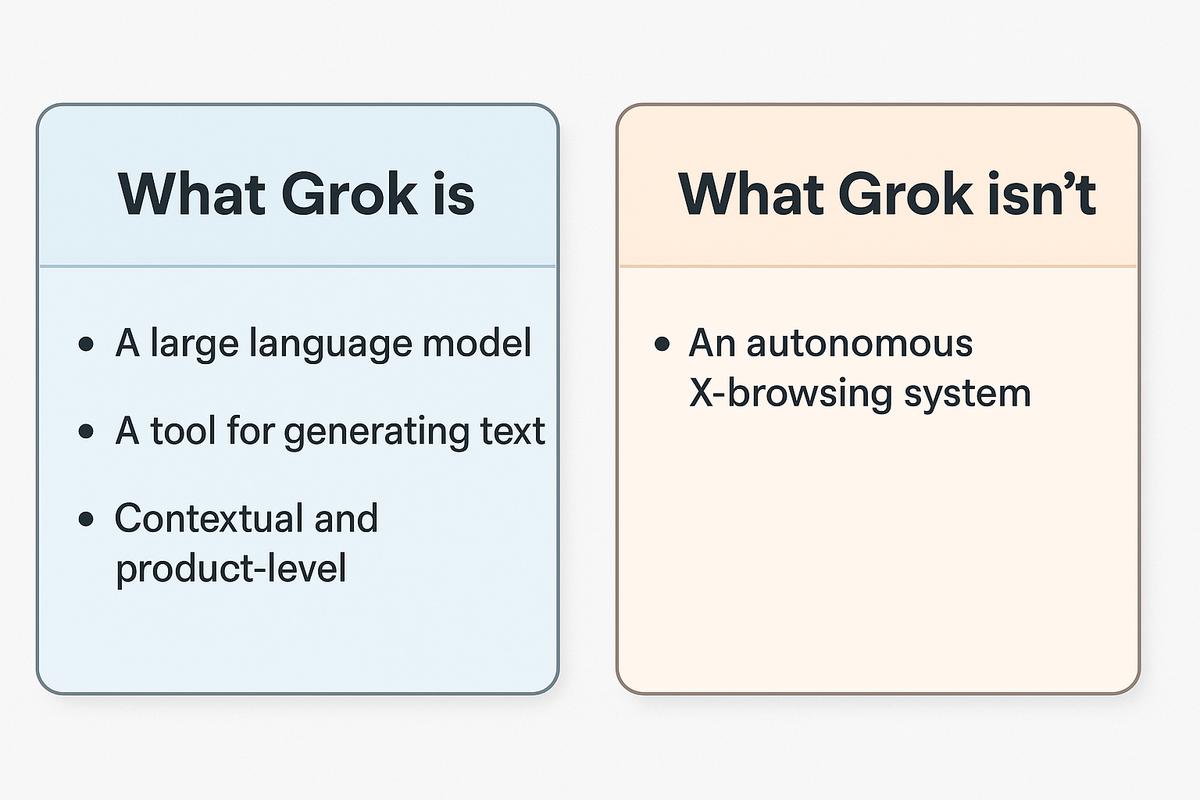
What Grok is
Grok is a large language model developed by xAI, designed to generate text responses based on patterns learned during training. At a technical level, it operates on the same core principles as other modern LLMs:
- It predicts likely next tokens based on input
- It does not possess awareness, intent, or understanding
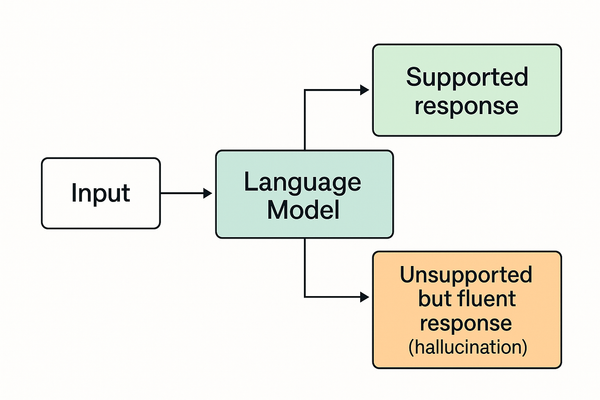
- It produces outputs probabilistically, not factually
Its distinguishing features are contextual and product-level, not architectural revolutions.
What makes Grok feel different
Grok’s perceived difference comes primarily from presentation and positioning, not from a new class of intelligence.
Key factors include:
- Integration with X, giving it access to real-time public posts
- A conversational style that is more informal and reactive
- Framing around “seeking truth” rather than strict neutrality
These elements shape user perception, often leading to the assumption that Grok is less constrained or more independent than competing models.
What Grok is not
Despite frequent claims, Grok is not:
- A self-updating intelligence
- A system that independently verifies truth
- An AI with unrestricted access to private data
- A model operating without safety or policy controls
Like all deployed LLMs, Grok operates within defined guardrails and moderation layers. Output tone may differ, but underlying limitations remain.
Why confusion persists
Confusion around Grok mirrors earlier hype cycles seen with other AI systems. Three recurring patterns drive this:
- Stylistic difference mistaken for capability
- Product branding interpreted as technical novelty
- Selective examples amplified as proof of superiority
When outputs align with a user’s expectations or beliefs, they are often treated as evidence of deeper intelligence rather than well-matched pattern completion.
The bottom line
Grok represents an alternative interface and positioning within the same fundamental class of AI systems. It does not rewrite the rules of artificial intelligence, nor does it bypass the constraints inherent to large language models.
Understanding Grok clearly requires separating how it is marketed, how it is experienced, and what it actually does under the hood.
Where to go next
For a related Explanation, see: What AI Hallucinations Are - and What They Aren't
For Rumours shaped by this misconception, see AI secretly stores everything you type