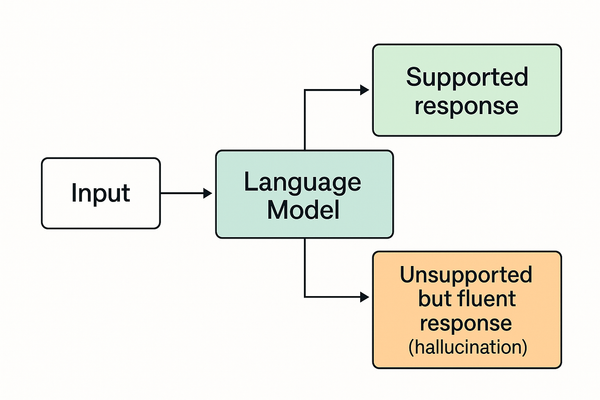
How Grok Rumours Spread Faster Than Facts on X
This investigation examines the mechanics, amplification patterns, and platform dynamics that allow claims about Grok to outpace factual verification.
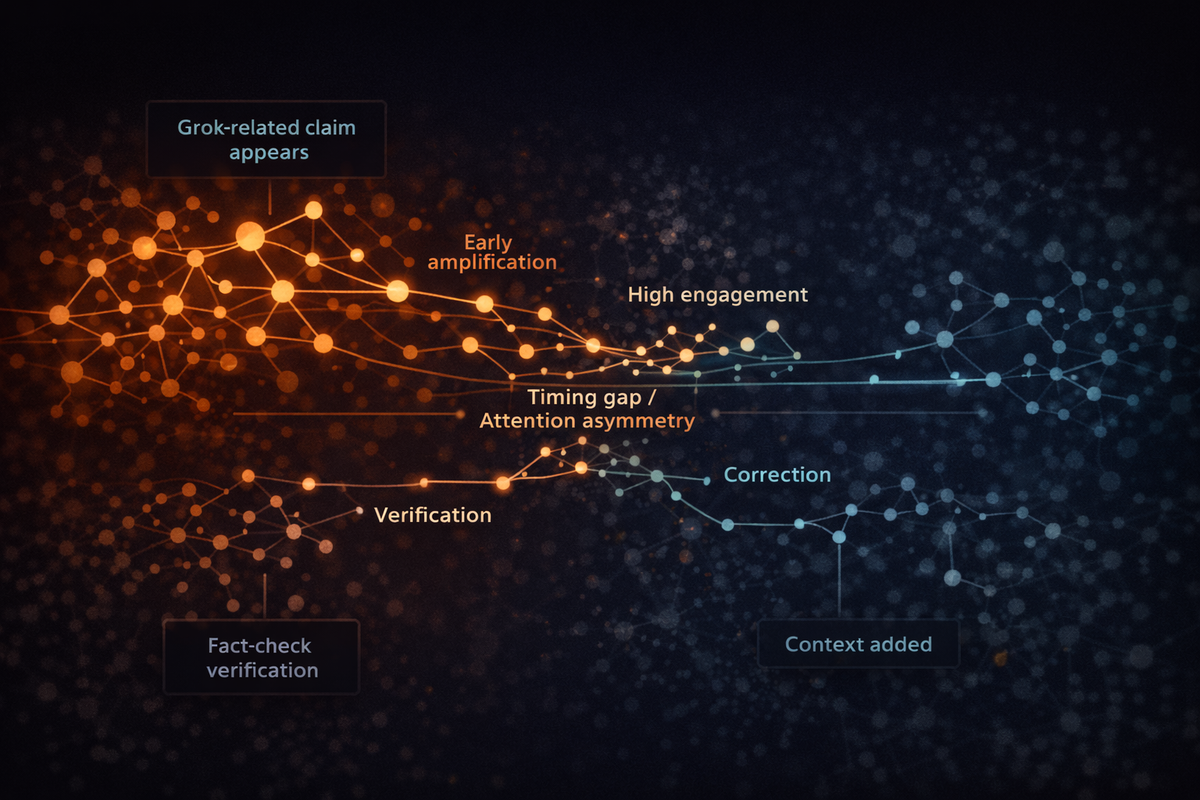
Overview
Grok-related claims appear on X at a speed that often outpaces clarification or evidence. Many of these claims persist even after being contradicted or quietly walked back. This investigation examines how and why Grok rumours propagate, and why technical nuance is routinely lost in the process.
What Sparked the Rumours
Grok’s development is closely tied to public statements, live posts, and informal commentary rather than traditional technical disclosures. Unlike other AI systems that are introduced through documentation or staged demos, Grok is frequently discussed in fragments: replies, jokes, half-answers, and speculative remarks.
These fragments are then:
- Screenshotted
- Reposted
- Interpreted
- Amplified
Often without context or qualification.
Where the Claims Originate
Most Grok rumours originate from three sources:
- Ambiguous statements
High-level comments about “integration,” “capability,” or “future potential” are interpreted as confirmations rather than possibilities. - Second-hand summaries
Posts summarising other posts remove hedging language and uncertainty. - Platform dynamics
X rewards immediacy and certainty. Posts framed as confident claims travel further than cautious explanations.
By the time a claim has circulated widely, its original wording is often unrecognisable.
Why Technical Nuance Gets Lost
Many Grok-related rumours rely on terms that sound technical but are poorly defined in public discourse:
- “On-device”
- “Live data”
- “Integrated”
- “Real-time”
These terms are frequently treated as interchangeable, even though they describe very different technical realities. Once simplified, they are difficult to correct without appearing pedantic or evasive.
As a result, clarification posts rarely achieve the same reach as the original claim.
The Role of Authority and Expectation
Grok benefits — and suffers — from its association with a high-profile individual and a highly engaged audience. Statements are often interpreted through expectation rather than content.
Supporters tend to:
- Assume rapid capability jumps
- Treat speculative comments as roadmaps
- Frame absence of denial as confirmation
Critics, meanwhile, may overstate limitations without evidence. Both dynamics contribute to distortion.
What the Evidence Actually Shows
To date:
- There is limited public technical documentation about Grok’s architecture
- No detailed deployment plans have been published
- Many widely shared claims lack primary sources entirely
Where constraints are acknowledged, they are often framed casually and then ignored in subsequent retellings.
Why These Rumours Persist
Grok rumours persist not because they are convincing, but because:
- They align with expectations
- They are difficult to disprove quickly
- Corrections are less engaging than speculation
In fast-moving online environments, narrative momentum matters more than accuracy.
Conclusion
The Grok rumour cycle illustrates a broader pattern in AI discourse: claims spread through repetition, not verification. When ambiguity meets amplification, even minor comments can harden into assumed facts.
Until clearer disclosures exist, Grok-related claims should be treated cautiously — especially those that rely on loosely defined technical terms or implied confirmation.
Where to go next
For a related Rumour, see Grok Will Run Fully On-Device in Future Tesla Cars
For a related Explanation, see Why “Live Data Access” Does Not Mean Real-Time Learning